Easy French Macaron Recipe- Perfect French Cookies
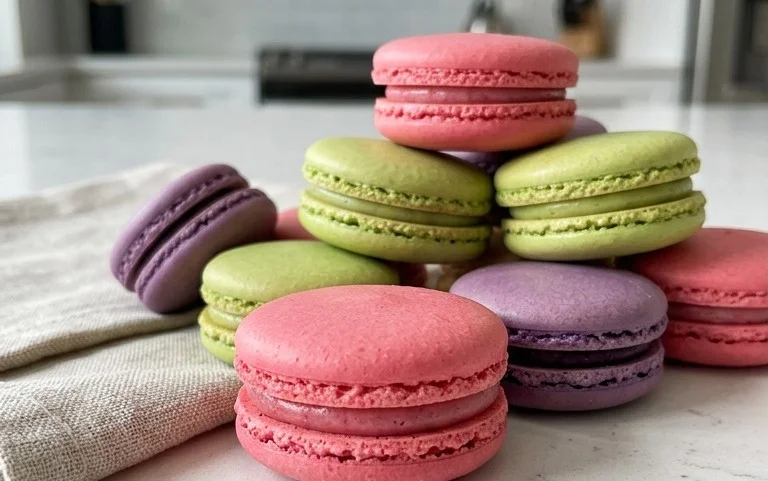
French Macaron Recipe: The delicate dance of almond flour, meringue, and creamy filling – that’s the magic of the French macaron! For many of us, these exquisite little cookies are more than just a sweet treat; they’re a symbol of elegance, a whisper of Parisian charm, and a delightful indulgence that feels utterly special. Have you ever gazed at those perfectly formed, vibrantly colored macarons and wondered how they achieve that signature delicate shell, that slightly chewy interior, and that irresistible melt-in-your-mouth texture? The allure of the French macaron lies in its beautiful simplicity, yet its creation is a testament to precision and a touch of culinary artistry. While they might seem intimidating, mastering the French macaron recipe is an incredibly rewarding journey. Today, I’m thrilled to share my guide to creating these iconic French delights right in your own kitchen, so you can experience that pure joy with every bite.
French Macaron Recipe
Welcome to the wonderful world of French macarons! These delicate, colorful, and utterly delicious meringue-based cookies sandwiched with a creamy filling are a true delight. While they might seem intimidating at first, with a little patience and attention to detail, you too can master the art of making perfect macarons. We’ll guide you through each step, from preparing your ingredients to piping and baking, ensuring you achieve those coveted smooth tops and characteristic “feet.”
Ingredients:
Cooking Instructions:
Phase 1: Preparing the Dry Ingredients
The first crucial step to achieving smooth-topped macarons is to properly prepare your dry ingredients. In a medium bowl, combine your sifted super-fine almond flour and powdered sugar. If you can’t find super-fine almond flour, you can pulse regular almond flour in a food processor for a few seconds, but be careful not to over-process, as this can release the oils and make your batter greasy. Sifting is absolutely essential to remove any lumps and ensure a fine, uniform texture. Sift these two ingredients together at least twice through a fine-mesh sieve. This process aerates the mixture and further breaks down any remaining clumps. Once sifted, whisk in the 1/4 teaspoon of salt. Set this bowl aside.
Phase 2: Making the Meringue
This is arguably the most critical stage of macaron making. In a clean, dry bowl of a stand mixer fitted with the whisk attachment, add your 120 grams of room-temperature egg whites. Ensure there is absolutely no trace of yolk or grease in the bowl or on the whisk, as this will prevent the egg whites from whipping properly. Begin extract whipping the egg whites on medium speed until they become frothy and opaque. Gradually add the 60 grams of granulated sugar, a tablespoon at a time, while the mixer continues to run. Once all the sugar is added, increase the speed to medium-high and continue whipping until stiff, glossy peaks form. This means that when you lift the whisk, the meringue should stand straight up without bending over. You should be able to turn the bowl upside down without the meringue falling out. Now it’s time to add your color and flavor. Gently fold in the 4 drops of liquid-gel food coloring and the 1 teaspoon of pure vanilla extract. Gel food coloring is recommended because it contains less liquid, which can affect the meringue’s consistency. Mix until the color is evenly distributed and you achieve your desired shade.
Phase 3: Macaronage – The Art of Folding
The term “macaronage” refers to the delicate process of folding the dry ingredients into the meringue. This is where you develop the correct batter consistency, which is key to developing those signature macaron feet. Add about a third of the sifted dry ingredients to the meringue. Using a rubber spatula, gently fold the dry ingredients into the meringue using a motion that scrapes down the sides of the bowl and then cuts through the middle. Repeat this process, adding the remaining dry ingredients in two more additions, folding gently after each. You are looking for a batter that flows like lava or thick ribbon – it should fall from the spatula in a continuous stream and slowly level out in the bowl within about 15-20 seconds. Be careful not to overmix, as this will result in flat macarons with no feet. Conversely, undermixing will lead to lumpy macarons with cracked tops. It takes practice to get this right, so don’t be discouraged if your first attempt isn’t perfect.
Phase 4: Piping and Resting
Prepare two baking sheets by lining them with parchment paper or silicone baking mats. If using parchment paper, you can draw circles on the underside as a guide for consistent macaron size. Transfer the macaron batter to a piping bag fitted with a round tip (about 1/2 inch). Hold the piping bag directly above the baking sheet and pipe small, even rounds, about 1 to 1.5 inches in diameter, leaving some space between each one as they will spread slightly. Once all the rounds are piped, firmly tap the baking sheets on your countertop several times. This helps to release any trapped air bubbles and encourages the macarons to spread evenly. Now comes the crucial resting period. Let the piped macarons sit at room temperature for at least 30 minutes, or until a skin forms on the surface. You should be able to gently touch the surface without the batter sticking to your finger. This skin is essential for the macarons to develop their feet during baking.
Phase 5: Baking and Filling
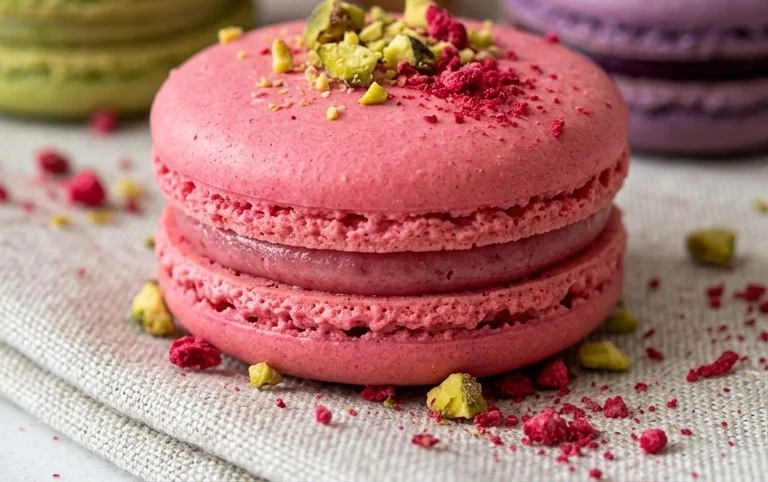
Preheat your oven to 300°F (150°C). Baking time can vary depending on your oven, but typically, macarons bake for 12-15 minutes. You’ll know they are ready when the feet have risen and the shells are firm to the touch. They should not wobble when gently nudged. Once baked, remove the baking sheets from the oven and let the macarons cool completely on the sheets before attempting to remove them. This is very important; if you try to remove them while they are still warm, they will likely stick to the parchment paper or mat. Once completely cool, carefully peel the macaron shells off the parchment paper. Pair up similarly sized shells. Pipe your Vanilla Buttercream Frosting or your chosen filling onto the flat side of one macaron shell and gently sandwich it with another. For the best texture, it’s recommended to let the filled macarons mature in an airtight container in the refrigerator for at least 24 hours before enjoying them. This allows the flavors to meld and the shells to soften slightly.
Enjoy your homemade French macarons! They are a labor of love, but the result is absolutely worth it.
Conclusion:
And there you have it! Mastering the art of the French macaron might seem daunting at first, but with this detailed recipe and a little patience, you’ll be creating these delicate, melt-in-your-mouth delights in no time. The beauty of this French macaron recipe lies in its simplicity and the incredible reward of that perfect, crisp shell giving way to a chewy interior. They’re not just stunning to look at, but also a testament to your baking prowess. Imagin extracte presenting a platter of these colorful gems at your next gathering – they are guaranteed to impress!
Serving these ethereal cookies is an event in itself. They are perfect alongside a cup of coffee or tea, making for a sophisticated afternoon treat. They also make for a wonderfully elegant dessert, especially when paired with fresh berries or a light crème anglaise. Don’t be afraid to experiment with different filling flavors too – from classic chocolate ganache and vibrant raspberry jam to salted caramel and zesty lemon curd, the possibilities are endless. We truly encourage you to give this French macaron recipe a try. Embrace the process, and enjoy the incredibly delicious outcome!
Frequently Asked Questions:
Why are my macarons cracking?
Macaron shells can crack for several reasons. Over-whipped meringue can lead to an airy structure that collapses, while under-whipped meringue won’t provide enough stability. Another common culprit is insufficient resting time for the batter before baking; this allows the shells to form a skin, which helps them rise evenly. Make sure your oven temperature is also accurate, as too high a heat can cause them to bake too quickly and crack.
My macarons don’t have “feet.” What did I do wrong?
The coveted “feet” – the ruffled edge at the bottom of a macaron – indicate a successful bake. If yours are missing, it often points to issues with the meringue or the macaronage (the process of folding the dry ingredients into the meringue). If the meringue isn’t stiff enough, or if you overmix the batter during macaronage, you won’t get those lovely feet. Ensure your meringue is glossy and holds stiff peaks, and fold the batter until it flows like lava, but not excessively.
Can I make macarons without a stand mixer?
While a stand mixer makes achieving the perfect meringue significantly easier due to its consistent power, it is absolutely possible to make French macarons without one. You can use a hand mixer, though it will require more arm strength and vigilance to reach the stiff, glossy peaks needed for a successful meringue. Whisking by hand is the most challengin extractg but still achievable with dedication!
French Macaron Recipe
A classic recipe for creating delicate and delicious French macarons.
Ingredients
-
150 grams sifted super-fine almond flour
-
180 grams powdered sugar
-
1/4 teaspoon salt
-
120 grams large egg whites (at room temperature)
-
60 grams granulated sugar
-
4 drops liquid-gel food coloring
-
1 teaspoon pure vanilla extract
-
Vanilla Buttercream Frosting or your choice of filling
Instructions
-
Step 1
Combine sifted almond flour, powdered sugar, and salt. Pulse a few times in a food processor to ensure no clumps remain. Sift again. -
Step 2
In a clean, dry bowl, whip the egg whites until foamy. Gradually add the granulated sugar, one tablespoon at a time, while continuing to whip until stiff, glossy peaks form. Add food coloring and vanilla extract and whip until just combined. -
Step 3
Gently fold the dry ingredients into the meringue in two additions, until a smooth, lava-like batter forms. Do not overmix. -
Step 4
Transfer the batter to a piping bag fitted with a round tip. Pipe small, uniform rounds onto baking sheets lined with parchment paper or silicone mats. -
Step 5
Tap the baking sheets firmly on the counter several times to release any air bubbles. Let the macarons rest at room temperature for 30-60 minutes until a skin forms. -
Step 6
Preheat oven to 300°F (150°C). Bake for 12-15 minutes, or until the macarons are set and easily peel off the parchment. Let cool completely before filling.
Important Information
Nutrition Facts (Per Serving)
It is important to consider this information as approximate and not to use it as definitive health advice.
Allergy Information
Please check ingredients for potential allergens and consult a health professional if in doubt.